

Concealed Hinges and Clean Lines in Aluminum Windows
t402-40
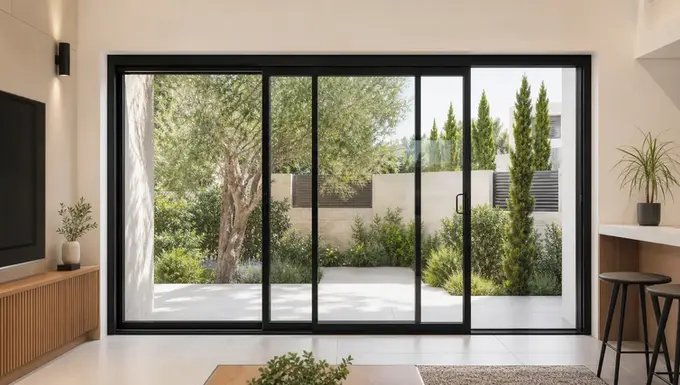
Concealed hinges are fitted inside the window frame so no hinge is visible from outside, giving aluminum windows a flush, minimal look. They suit designers who want uninterrupted lines, though they need careful planning for weight, opening direction and access.
What concealed hinges are
Concealed hinges, sometimes called hidden hinges, sit within the profile of the window sash and frame rather than on the outer face. When the window is closed, only a thin seam shows, and the frame reads as one continuous surface. This is especially valuable in contemporary facades where the designer wants the glass and the aluminum outline to speak without interruption.
The mechanism is adjustable in three directions, so the sash can be aligned precisely after installation. That adjustment matters because a hidden hinge leaves little room for correction later.
Where clean lines make the biggest difference
Minimal hardware works best on large openings, floor-to-ceiling units and window walls where the frame is the main visual element. Designers often pair concealed hinges with narrow sightlines so that the whole assembly appears as a single plane.
- Full-height sliding or casement units in living rooms
- Corner and bay arrangements with continuous glazing
- Interior partitions combined with exterior windows
Weight, size and opening direction
Concealed hinges carry the sash weight through a smaller hardware footprint, so the size and weight of the glazing must be matched to the hinge rating. Heavy double glazing or large panels need hinges designed for that load, and the profile must be detailed to support them.
Opening direction also changes what is possible. Inward and outward openings place different demands on the frame, and the choice should be made early in the drawing stage together with the locking and the handle position.
Finishes that keep the line uninterrupted
Aluminum windows can be powder coated in a wide range of colors, and the finish should be consistent across the frame, sash and visible hinge seam. Matching tones reduce the sense of joints and help the window read as one object.
Surface treatment is applied before assembly where possible, so the hidden parts also receive a durable finish. Consistent finishing supports the clean look over many years of use in Israeli weather.
Planning with the designer and engineer
Concealed hardware should be specified in the early design package, not added at the end. The drawing needs to show the sash profile, the hinge position, the gasket and the glass build-up so that every element fits as intended. Exact structural values are confirmed with the engineer for each project.
A short site measurement and a written specification help prevent surprises, especially where walls are not perfectly plumb.
Installation and adjustment
Clean lines depend on accurate installation. The frame must be level, plumb and fixed so that the sash sits evenly in the opening. After installation, the hinges are adjusted so that gaps are even and the window closes with consistent pressure.
A final check after the first weeks of use allows small fine-tuning, keeping the seam tight and the movement smooth.
Frequently asked questions
Are concealed hinges suitable for all aluminum windows?
Not every profile or sash weight is suitable. The window system and hinge rating must be matched to the glazing and opening type, which is checked during the design stage.
Do concealed hinges make windows less secure?
Concealed hinges are not visible from outside, which reduces tampering. Security depends on the complete system, including locks and frame design, so discuss your requirements at the start.
Can I adjust concealed hinges after installation?
Yes. Most concealed hinge systems allow adjustment in several directions to correct alignment and gap size after the window is fitted.
Will the window look different from a standard hinged window?
Yes. The main visible difference is the absence of exposed hinges, giving a flatter, more continuous surface and a cleaner outline.
Common mistakes to avoid
Choosing hidden hardware late in the project, after the profile and glazing are fixed, often leads to compromises. Ignoring the sash weight and opening direction can also cause sagging or uneven gaps later.
Our recommendation
Bring the hinge system into the drawing package from the start, and confirm sash weight, glass build-up and opening direction with the engineer before fabrication. This keeps the clean line intact on site.
Summary
Concealed hinges let aluminum windows show only clean, continuous lines, provided the hardware is planned early and matched to the sash and glazing.
Related guides
- Window Screens and Invisible Mesh Design Choices
- Window Handle Design Options for Contemporary Frames
- Integrating Shutters and Blinds With Aluminum Frames
- Hardware Finishes That Coordinate With Window Frames
- Window Sills and Trim Details in Aluminum Design
- Matching Aluminum Windows With Interior Door Styles
- All models in this category
Send us your drawings or photos and we will advise on concea
עוד מדריכים ודפים בנושא
- Anthracite Grey Window Frames: Matching Facade Materials
- Aluminum Window Handle Design: Options for Contemporary Frames
- Hardware Finishes That Coordinate With Window Frames
- Matching Aluminum Windows With Interior Door Styles
- Window Sightlines and Views From Living Spaces
- Lighting Interiors Through Aluminum Window Design
- Roof Line and Window Alignment for Cohesive Exteriors
- Triangular and Angled Aluminum Windows for Unique Facades
- Arched and Curved Aluminum Windows: Design Possibilities
- Window Proportions: Golden Ratio and Facade Balance